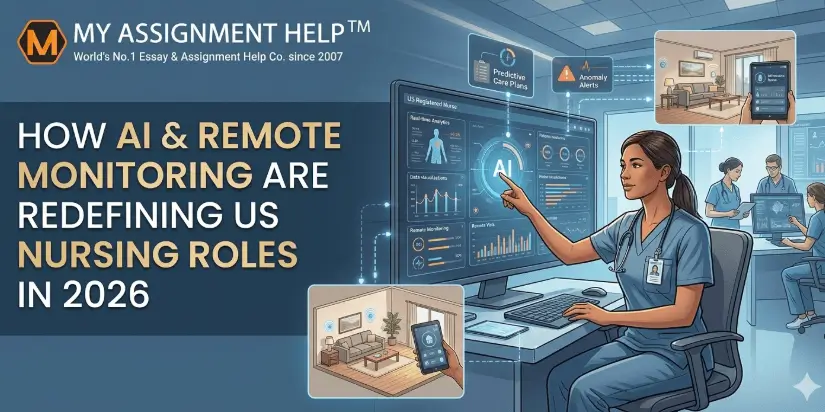

The United States healthcare landscape in 2026 is no longer defined solely by the bedside; it is defined by the “digital side.” As the nation grapples with a projected shortage of nearly 100,000 registered nurses, technology has shifted from being a luxury to a fundamental necessity. Artificial Intelligence (AI) and Remote Patient Monitoring (RPM) are no longer futuristic concepts—they are active partners in the nursing workflow, reshaping responsibilities, improving patient outcomes, and mitigating burnout.
The Shift from Manual to Machine-Assisted Care
Historically, nursing involved heavy administrative loads, from charting to manual vitals monitoring. Today, AI-integrated systems handle the “heavy lifting” of data entry. Ambient clinical intelligence now listens to patient-provider interactions, transcribing notes in real-time and allowing nurses to focus on the patient rather than the screen. This transition ensures that the “human element” of nursing remains central, even as the infrastructure becomes increasingly digital.
For nursing students entering this high-tech workforce, the learning curve can be steep. Navigating the intersection of clinical ethics and algorithmic decision-making requires a new set of academic skills. If you find yourself overwhelmed by the evolving curriculum, seeking professional help with nursing assignment can provide the clarity needed to master these complex digital health modules.
1. Remote Patient Monitoring (RPM): The “Hospital Without Walls”
In 2026, the concept of the “Hospital at Home” has gained massive traction in the US. RPM tools—ranging from wearable biosensors to AI-powered smart beds—allow nurses to monitor chronic conditions like COPD, heart failure, and diabetes from a centralized “command center.”
- Continuous Vitals Tracking: Unlike the intermittent checks of the past, 2026 technology provides a continuous stream of data.
- Early Intervention: AI algorithms analyze trends in heart rate variability and oxygen saturation, alerting nurses to potential deterioration hours before a physical symptom manifests.
- Geographic Flexibility: Rural populations in states like Wyoming or West Virginia now have access to top-tier nursing care via telehealth, bridging the urban-rural healthcare gap.
2. Predictive Analytics: Moving from Reactive to Proactive
One of the most significant shifts in the US nursing role is the move toward predictive care. AI models integrated into Electronic Health Records (EHR) now predict “Sepsis” or “Fall Risks” with over 90% accuracy.
The Impact on Nursing Autonomy:
- Risk Stratification: Nurses now use AI dashboards to prioritize which patients need immediate attention, optimizing floor efficiency.
- Medication Safety: AI cross-references patient genomics with prescriptions to flag potential adverse drug reactions that traditional systems might miss.
As healthcare becomes more data-driven, students are often tasked with analyzing complex case studies involving these technologies. Many find that obtaining help with homework focused on healthcare informatics is essential for staying ahead in a competitive academic environment.
3. Virtual Nursing: A New Career Path
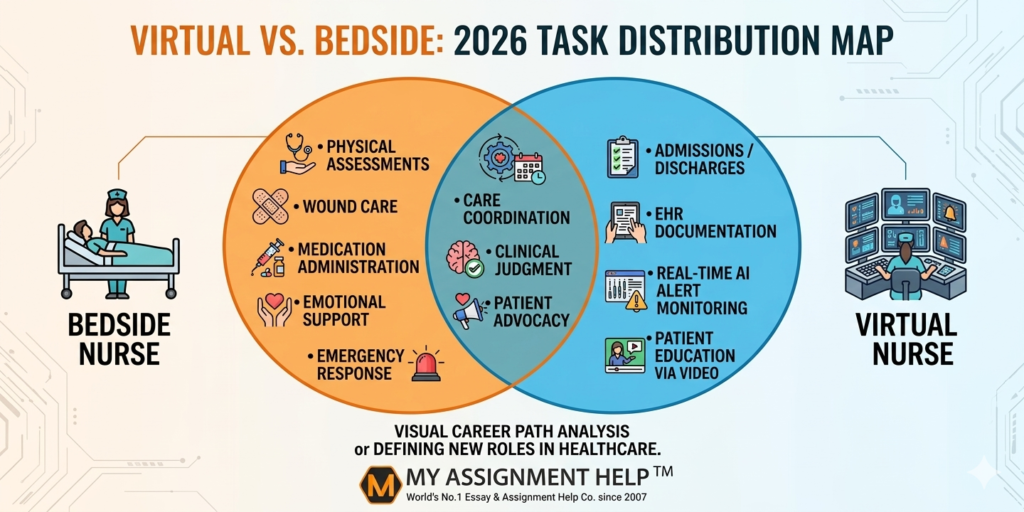
A significant trend in 2026 is the rise of the “Virtual Nurse.” These are experienced RNs who support on-site staff by handling admissions, discharges, and patient education via high-definition video links.
- The “Second Pair of Eyes”: Virtual nurses can double-check medication dosages or monitor high-risk patients, reducing the cognitive load on bedside nurses.
- Mentorship: Experienced nurses who may have physical limitations can continue their careers in virtual roles, mentoring younger nurses and ensuring clinical standards are met.
4. Addressing the Ethical and EEAT Standards in 2026
In 2026, the American Nurses Association (ANA) emphasizes that AI must be “Transparent and Fair.” Nurses are now trained to recognize “Algorithmic Bias”—where AI might provide less accurate predictions for certain demographic groups.
Experience, Expertise, Authoritativeness, and Trustworthiness (E-E-A-T) are critical. Nurses must act as the final “ethical filter,” ensuring that AI recommendations align with patient-centered care and clinical reality.
Logic-to-Landscape: The Skill-to-Salary Bridge
With the adoption of AI and RPM, the nursing salary landscape has shifted. Nurses with “Health Informatics” certifications or experience in “Virtual Care Coordination” are seeing a 15-20% increase in compensation compared to traditional roles.
| Role | Core Tech Skill | Projected Salary Growth (2026) |
| Tele-ICU Nurse | Remote Hemodynamic Monitoring | +18% |
| Informatics Nurse Specialist | AI Data Integrity & Auditing | +22% |
| Clinical Nurse Consultant | Predictive Model Integration | +15% |
Key Takeaways
- AI is a Tool, Not a Replacement: AI handles data-heavy tasks, but the clinical judgment and empathy of the nurse remain irreplaceable.
- RPM is Expanding Access: Remote monitoring is vital for managing the US aging population and chronic disease crisis.
- Continuous Learning is Mandatory: 2026 nursing requires a blend of traditional clinical skills and digital literacy.
- Efficiency Gains: AI reduces “documentation fatigue,” one of the leading causes of nurse burnout.
Challenges and Considerations
While the benefits are clear, 2026 also brings challenges:
- Data Privacy: Protecting patient data in a world of connected devices is a top priority.
- Tech-Equity: Ensuring that all hospitals, not just wealthy urban centers, have access to these life-saving tools.
- Human Connection: Maintaining a therapeutic relationship when much of the interaction is mediated by screens.
See also: Intelligent Sensors and Their Applications
FAQ Section
Q1: Will AI replace nurses in the US by 2030?
A: No. While AI can analyze data and suggest treatments, it lacks the critical thinking, emotional intelligence, and physical dexterity required for comprehensive nursing care.
Q2: How does Remote Patient Monitoring help with the nursing shortage?
A: RPM allows one nurse to monitor multiple patients simultaneously across different locations, significantly increasing the “care capacity” without increasing physical strain.
Q3: Is AI-generated nursing care safe?
A: AI does not “provide care” independently. It provides recommendations that must be verified by a licensed RN, ensuring a “Human-in-the-Loop” safety standard.
Q4: Where can I get help with nursing assignments regarding AI in healthcare?
A: Specialized academic services like MyAssignmentHelp offer expert guidance on nursing informatics and modern healthcare trends.
Conclusion
In 2026, US nursing is undergoing a digital renaissance. By embracing AI and Remote Patient Monitoring, the profession is moving toward a more sustainable, proactive, and precise model of care. As we look forward, the successful nurse will be the one who can seamlessly navigate both the bedside and the motherboard.
Author Bio:
Sarah Jenkins, MSN, RN, is a Senior Health Content Specialist at MyAssignmentHelp. With over 12 years of experience in clinical nursing and a Master’s in Nursing Informatics, Sarah focuses on bridging the gap between traditional healthcare practices and modern technological integration. She is a frequent contributor to nursing journals and provides academic mentorship to the next generation of healthcare professionals.
References:
- U.S. Department of Health and Human Services (2026). The State of the Health Workforce.
- Journal of Nursing Regulation (2025). AI Ethics in Clinical Decision Support.
- American Nurses Association (ANA) – 2026 Technology Standards for Nursing Practice.
- HIMSS (Healthcare Information and Management Systems Society) – 2026 Annual Report on Digital Health Trends.
