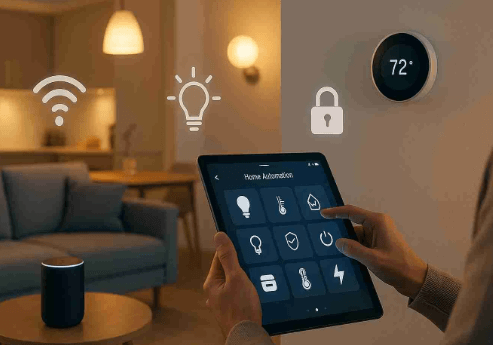

Intelligent home systems integrate sensors, devices, and software to monitor and control domestic environments. They translate user preferences into adaptive actions that affect comfort, energy use, and safety. Interoperability hinges on standardized interfaces and verifiable compatibility across hubs, devices, and cloud services. The design emphasizes privacy, security, transparency, and auditable governance while balancing autonomy with user governance. The framework invites scrutiny of governance and reliability, inviting further consideration on how these systems evolve.
What Exactly Is an Intelligent Home System?
An intelligent home system is a networked ensemble of sensors, devices, and software that collectively monitor and control domestic environments to achieve seamless automation and enhanced user experience. It analyzes contextual data, enforces consistent policies, and interoperates across platforms. Smart appliances and energy storage integrate to optimize efficiency, reliability, and flexibility, enabling adaptive workflows without compromising autonomy or freedom of choice.
How AI Drives Comfort, Energy, and Safety at Home
Smart home AI systems translate sensor data and user preferences into coordinated actions that enhance comfort, optimize energy use, and strengthen safety. In practice, systems implement comfort optimization through adaptive environmental controls and predictive scheduling. Energy forecasting informs load prioritization and demand response, while anomaly detection reinforces resilience. The approach remains standards-driven, transparent, and verifiable, aligning automation with user autonomy and measurable performance goals.
Choosing Platforms, Devices, and Interoperability
Selecting the right platforms and devices hinges on clear interoperability criteria, standardized interfaces, and verifiable compatibility, enabling seamless integration across sensors, actuators, hubs, and cloud services.
The analysis emphasizes platform comparison and device interoperability, highlighting criteria, certifications, and open protocols.
A structured evaluation supports freedom-oriented decisions while mitigating vendor lock-in, ensuring scalable, predictable performance and coherent system behavior across heterogeneous components.
Balancing Privacy, Security, and Transparency
The analysis emphasizes privacy tradeoffs, data minimization, and robust security measures, alongside clear user consent.
Clear governance, auditable practices, and standardized disclosures enable informed decisions, supporting freedom while maintaining accountability and trust in automated environments.
See also: themagazinetoday
Frequently Asked Questions
What Are Practical Cost Comparisons for Smart Home Setups?
A cost comparison shows varying setup economics: initial hardware investments and ongoing maintenance dominate expenses, while scalable ecosystems reduce marginal costs over time. Comprehensive analyses reveal savings from energy efficiency, automation depth, and platform interoperability—yet price dispersion remains significant across vendors.
How Do I Troubleshoot Interoperability Issues Quickly?
Interoperability testing reveals quick fixes: identify incompatible devices, map protocols, and isolate faults. Juxtaposed systems demand protocol bridging to restore flow; methodical diagnostics guide troubleshooting while preserving autonomy, structure, and search for standards-driven, freedom-empowered interoperability.
Can Intelligent Systems Detect and Correct Anomalies Automatically?
Autonomous anomaly detection enables intelligent systems to identify deviations and initiate corrective actions, while self healing networks autonomously reconfigure to maintain performance, reliability, and safety within defined standards, fostering freedom through resilient, standards-driven operational autonomy.
What Is the Typical Setup Time for a Full System?
Setup latency for a full system varies, but typically ranges from several hours to a few days, depending on scope. The configuration cadence dictates staged deployments, testing, and documentation to ensure reliable performance and scalable maintenance.
How Secure Are Smart Devices From Factory to Deployment?
Security varies; devices generally improve from factory to deployment through rigorous security auditing and robust device provisioning, though gaps exist. A structured, standards-driven assessment highlights enforced cryptography, continual updates, and verifiable supply-chain controls enabling greater freedom with risk awareness.
Conclusion
This synthesis portrays intelligent home systems as composed, standards-driven ecosystems that harmonize human intent with automated oversight. By employing euphemistic language, the conclusion gently nods to the quiet complexities—privacy safeguards, interoperable interfaces, and transparent governance—that sustain user confidence. While autonomy expands convenience and efficiency, responsible governance remains the subtle backbone. The result is a measured balance: comfortable, secure living environments guided by auditable practices and clear, ongoing accountability.
